

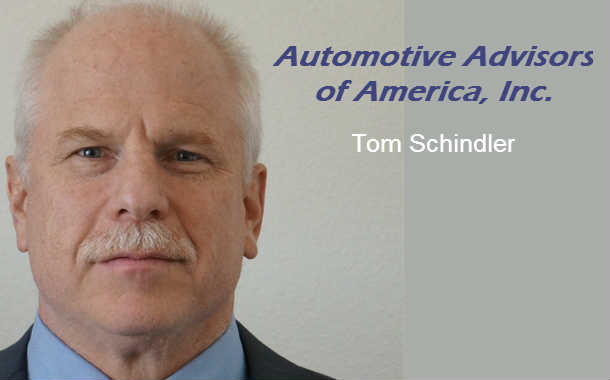
By Tom Schindler – President, Automotive Advisors of America, Inc.
Many prospective candidates assume that money is a sufficient qualification to purchase an automotive franchise. However, there are other key criteria considered during the approval process.
Every manufacturer is looking for four basic requirements when approving a candidate. They are: Qualified management, sufficient working capital, appropriate facilities, and floor plan financing.
- Management – It is not enough to simply have a desire to own a dealership. Dealer agreements have separate paragraphs for owners (the investors) and management (those who run the store on a daily basis). Manufacturers generally require that the potential manager have as much as five years automotive experience operating a dealership, typically in the capacity of a General Manager or dealer principle. Manufacturers want candidates with the maximum chance of success and approving a candidate without experience exposes the manufacturer to potential liability should the dealership not succeed.
Additionally, any management candidate put forth can expect to have his or her prior performance scrutinized. Manufacturers are looking for top candidates with proven sales performance (i.e. consistently high sales), and high customer sales satisfaction ratings. They will look at the previous store(s) the manager has worked at to see what kind of sales performance and customer satisfaction scores the store had.
- Working Capital – In order to ensure the best chance of dealership success, there has to be sufficient working capital invested to support a store’s day-to-day operations from the outset. Dealerships are capital-intensive, with money tied up in inventory, parts, customer and factory receivables, pre-paid expenses, fixed assets etc. Hence, every manufacturer will require a candidate to provide a pro-forma showing that they meet or exceed the minimum working capital requirement.
It is important to note that working capital is an investment in the store above and beyond the cost of acquiring or equipping it. The bigger the store, the more working capital will be required; the amount can range from hundreds of thousands to millions of dollars. Undercapitalized stores are a recipe for disaster. If they are undercapitalized they may not have enough money in the bank to meet their day-to-day expenses because all the money is tied up in inventory, assets and receivables. Any candidate who cannot meet a manufacturer’s working capital requirement should not anticipate approval.
For a quick calculation of this requirement, many manufacturers have a Working Capital guide based on PNUPP (Per New Unit of Planning Potential). This guide provides an estimate of the working capital needed simply by multiplying the PNUPP by a dollar figure. All manufacturers have a more precise guide that calculates working capital using formulas based on sales projections, and will often provide the requirement upon request.
- Facilities – A candidate must have a facility in order to operate a dealership, but not just any building will do. Here again, manufactures have minimum facility and land guidelines that must be satisfied. These guidelines are put in place to ensure that there is proper space for your new vehicle display, parking (for car inventory, customers and employees), parts department, business office, showroom, and a service department (large enough to service your customer base). The higher the projected sales volume for that store, the larger the store’s required size. Before committing to buying or leasing a property, it is best to understand the manufacturer’s facility parameters.
Additionally, all manufacturers have a facility image program to which a dealer must adhere. To maximize the impact on the customer experience, each manufacturer requires that their brands be represented with a consistent and recognizable appearance. Requirements range from building facades, brand signs, furniture, customer lounges, lighting, sales display, and flooring, down to the smallest detail of pictures on the walls. Understanding and accounting for these costs in the total investment is crucial whether building or buying an existing store.
- Floor Plan- Manufacturers require minimum financing – or floor plan — sufficient to carry enough new vehicles to represent the brand and meet projected sales goals. A floor plan is simply a “line of credit” for a dealer’s vehicle inventory. Floor plans are usually obtained from a bank or captive (manufacturer’s own lending arm) and are commonly obtained for both new and used vehicles. Candidates will have to meet financial parameters and adhere to lender’s covenants in order to obtain a floor plan. This can be an arduous process in times of easy credit, and nearly impossible when credit it tight, so it is wise to secure the commitment for a floor plan prior to putting too much effort into purchasing a store.
There are a myriad of other items required of a buyer in order to get final manufacturer approval beyond the four basic requirements described above, such as applications, proper corporate structure, proof of funds, business licenses, dba filings, etc.
However, meeting the four major requirements of qualified management, sufficient working capital, appropriate facility and a floor plan are imperative if a buyer is to have a chance of approval.
Thomas Schindler is president of Automotive Advisors, Inc., a California-based dealership buy sell advisory firm. He can be reached at 1-925-918-1384 and tom@automotiveadvisors.com. His firm’s website is www.automotiveadvisors.com.


 Editor and publisher Alysha Web has decades of experience covering the automotive industry in both the U.S. and China. Previously she was the China bureau Chief for Automotive News and continues to be a contributing writer to Wards Auto.